





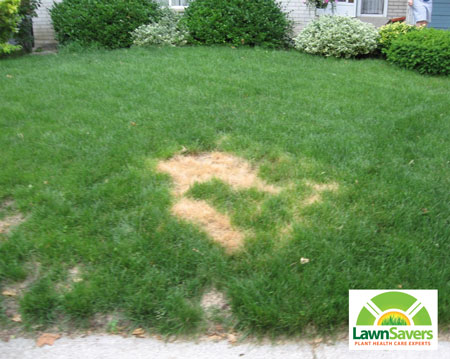
If you have a dog and a lawn, you have probably noticed the spots. Small yellow patches, sometimes with an oddly perfect green ring around the outside, scattered across the grass. The internet will tell you this only happens with female dogs. It does not.
It is not a female dog problem
The myth exists because of posture, not biology. Female dogs tend to squat in one place, so the urine pools rather than spreading out, which makes the spot more noticeable. But plenty of male dogs squat to urinate too, rather than lifting a leg, and produce the exact same kind of spot.
Any dog that returns to the same general area repeatedly, male or female, can produce a yellow patch. It comes down to frequency and concentration in one spot, not which dog is doing it.
Why urine actually causes the yellowing
The science comes down to salt. Urine is high in nitrates, and nitrates carry a heavy salt content. When too much salt builds up in the soil, whether from a dog, a snowplow piling salted snow onto a lawn, or salt shoveled off a patio, the roots underneath cannot handle it. Salt burns roots, and the result is a yellow, dead patch where the concentration was highest.
It is the same basic mechanism whether the salt source is a dog, a de-icing product, or driveway runoff. Too much concentrated salt in one small area, and the grass underneath cannot survive it.
The green ring is actually a good sign
Here is the part most people get backward. That perfect green ring surrounding the dead yellow spot is not a separate problem. It is the same urine doing exactly what nitrogen is supposed to do.
Nitrates are nitrogen, and nitrogen is exactly what lawns need to grow thicker, faster, and a darker shade of green. As the urine spreads outward from the center, it dilutes. The middle of the spot gets hit with a concentration strong enough to kill the grass, while the edges receive a smaller, diluted dose that acts as a quick shot of fertilizer instead. The result is a dead center surrounded by a noticeably greener ring.
That green ring backs up something pretty simple: nitrogen works. Too much of it in one spot kills the grass, but a smaller dose right at the edges does the opposite, making it thicker and greener than the rest of the lawn. Leave the spot alone, and you’ll often watch it spread outward over time, sometimes turning into a donut shape with a green ring that just keeps growing.
When you are most likely to see it
Dog spots tend to follow a seasonal pattern. They show up most after winter, when dogs do not want to navigate through snow and instead pick one quick spot near the door, then head right back inside. That repeated traffic in one small area, combined with cold weather slowing grass growth, makes spring a peak season for noticeable spots.
Watering plays just as big a role. A lawn watered consistently through an irrigation system rarely develops visible dog spots, since regular watering dilutes the salt concentration before it has a chance to build up and damage the roots. A lawn already under heat stress or drought stress is far more vulnerable, since it has less ability to recover from the extra salt load on top of everything else.
Even a dog that is just passing through the neighborhood, rather than living at the house, can leave a visible spot if the lawn underneath was already stressed before the urine hit it.
What actually helps
A few habits make a real difference for lawns dealing with regular dog traffic.
Watering the area soon after a dog goes helps dilute the concentration before it settles into the soil. Keeping up with consistent watering across the whole lawn matters even more, since a well-watered lawn dilutes salt buildup far better than one that is already dry or stressed. Piling extra fertilizer directly onto existing dog spots should be avoided, since that adds even more nitrogen on top of an area already overloaded with it. For dogs that consistently return to the same patch of lawn, training them toward a mulched or gravel area instead can prevent the spot from forming in the first place.
A spot here and there is normal for any lawn with a dog on it. The real concern is a lawn that is already weak or under stress, since that is when even a small amount of dog urine leaves a mark that takes much longer to recover.
If a lawn is showing more spots than usual, or looks thin and stressed even in areas the dog never reaches, that points to a bigger underlying issue worth having a professional take a look at.